For patients in India living with rare diseases, advanced cancers, serious chronic illnesses, or other complex conditions, treatment options may sometimes exist internationally before they become commercially available in India. When a medicine cannot be obtained through conventional local channels, accessing it can become a significant challenge.
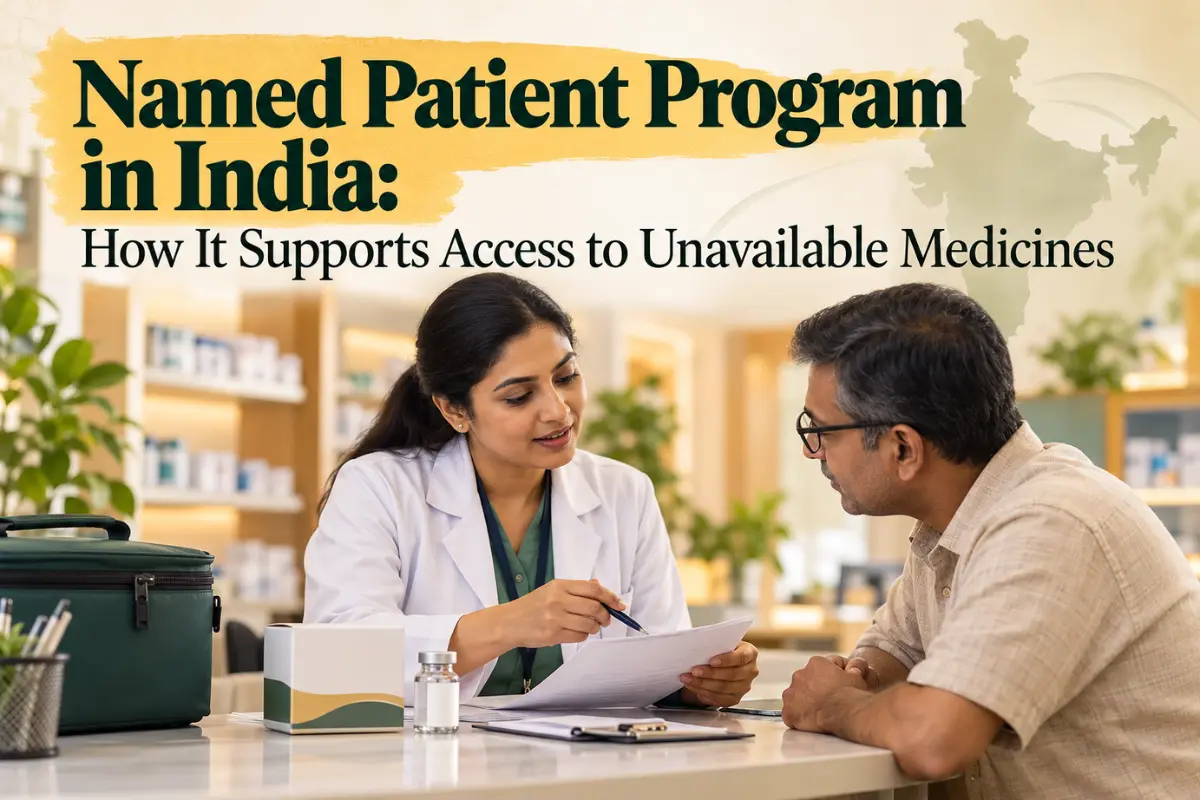
A Named Patient Program (NPP) provides a structured, patient-specific pathway for accessing certain medicines that are not readily available through the regular commercial supply chain. The process is based on medical need and involves appropriate documentation, regulatory authorization, medicine sourcing, and customs procedures.
What is a Named Patient Program?
- A Named Patient Program enables an individual patient to access a medicine when a treating physician determines that the treatment is medically appropriate and the medicine is not readily accessible through conventional channels.
- In India, personal import mechanisms regulated by the Central Drugs Standard Control Organization (CDSCO) can facilitate access to certain medicines for individual treatment. The medicine must be intended for the named patient’s personal use and cannot be imported for resale or commercial distribution.
- A valid prescription and supporting medical documentation are central to the process. The quantity requested must also correspond to the patient’s treatment requirements and applicable regulatory conditions.
Why is NPP access important in India?
The availability of innovative medicines can vary significantly between countries. A therapy may be approved and commercially available in another jurisdiction while remaining unavailable in India.
This gap can be particularly important for patients requiring specialized treatments pertaining to oncology, hematology, rare diseases, neurological disorders, immunological conditions, kidney and liver diseases, and cardiovascular conditions. For these patients, a patient-specific access pathway can provide an alternative when the required medicine cannot be obtained through India’s standard commercial channels.
NPP vs. Buying medicines online
When a medicine is unavailable in India, it may be tempting to purchase it directly from an overseas website. However, international availability does not automatically make an import legally or practically straightforward.
A Named Patient Program connects the medicine to a specific patient’s medical requirement and provides a regulated framework for documentation and import.
Patients should be particularly cautious of suppliers who claim that prescriptions, regulatory approvals, or import documentation are unnecessary. Apart from regulatory concerns, purchasing medicines through uncontrolled channels can create questions around product authenticity, quality, storage, and traceability.
Named Patient Program vs. Compassionate Use
NPP and Compassionate Use Programs (CUPs) can both address unmet medical needs, but they are not interchangeable. A personal-import or NPP pathway may apply to medicines that have been approved by foreign regulators but are not yet approved or marketed in India. Compassionate-use arrangements may instead involve investigational medicines and additional requirements involving the treating specialist, ethics oversight, CDSCO, and the manufacturer.
The appropriate pathway therefore depends on the regulatory status of the medicine and the individual patient’s circumstances.
How does the Named Patient Access process work?
The process generally involves five key stages.
1. Medical evaluation:
The treating specialist first evaluates the patient’s condition and determines whether the requested medicine is appropriate. The prescription should clearly identify the medicine, dosage, treatment requirements, and relevant clinical justification. This establishes the medical basis for the request.
2. Documentation: The required supporting documents are then prepared. These may include:
- Doctor’s prescription
- Patient identification
- Relevant medical records or clinical justification
- Supplier’s proforma invoice
- Other documents required for the applicable regulatory process
Accurate documentation helps demonstrate that the medicine is being imported for the specific patient’s treatment.
3. CDSCO application:
For the applicable personal-import pathway, the request can be submitted through the CDSCO’s SUGAM online system. The process involves the relevant application and import authorization forms, including Form 12A and Form 12B, along with the required supporting documents.
4. Regulatory authorization:
The application is reviewed by the appropriate regulatory authority. Once authorization is granted, the medicine can be imported subject to the conditions specified in the authorization. This regulatory oversight helps distinguish a legitimate patient-access pathway from an informal overseas purchase.
5. Customs clearance and delivery:
The medicine must subsequently complete the applicable customs and import procedures. The import authorization, prescription, identification, invoice, and other relevant documents may need to be presented during customs clearance. Once the shipment has cleared the necessary procedures, it can proceed to the patient.
Who is involved in the process?
Accessing an unavailable medicine often requires coordination between several parties. The treating physician establishes the medical need and provides the prescription and clinical justification. Regulatory documentation must then be prepared and submitted through the appropriate process. Depending on the arrangement, pharmaceutical companies, authorized suppliers, sourcing partners, and logistics providers may also be involved in obtaining and delivering the medicine.
For specialized therapies, effective coordination is particularly important because the process may involve manufacturers and suppliers located in different countries as well as international shipping and customs requirements.
What about the cost?
Regulatory authorization does not mean that the medicine is provided free of charge. A Named Patient Program is primarily an access mechanism, not a medicine-funding scheme. The cost may need to be covered by the patient, insurance, sponsorship, or another funding arrangement.
Expenses may include cost of the medicine, international shipping, handling and logistics, customs-related charges and other applicable import expenses.
Certain medicines used to treat rare diseases may qualify for customs-duty exemptions subject to the applicable government notifications and eligibility requirements. Patients should confirm whether their specific medicine and medical circumstances meet the conditions for any available exemption.
Why compliance and traceability matter
Obtaining an unavailable medicine involves more than finding a supplier. The medicine must be sourced, documented, transported, and delivered through an appropriate process. Maintaining traceability, documentation, quality assurance, and regulatory compliance helps protect patients throughout the access journey.
This is particularly important for medicines that require specialized storage or handling during international transportation.
How patients can get started
Patients who have been prescribed a medicine that is unavailable through conventional channels should begin by discussing the treatment with their treating specialist.
The physician can assess the medical need and determine whether the medicine is appropriate. If a patient-specific import pathway is suitable, the required prescription and clinical documentation can then be prepared before proceeding with the applicable CDSCO process. Patients and caregivers should also ensure that the medicine is sourced through a legitimate supply channel and that all import and customs requirements are addressed before shipment.
Important points for patients regarding NPP access:
- Access through NPP is patient-specific and requires appropriate medical documentation and compliance with the applicable regulatory requirements.
- If a medicine is available abroad, does not directly imply that it can simply be imported into India. The applicable authorization, documentation, and customs requirements must be followed.
- NPP provides a regulatory pathway for access; it does not automatically provide financial assistance.
- NPP and compassionate use are NOT the same. They can involve different regulatory frameworks and apply to medicines at different stages of development or approval.
Conclusion
For patients facing serious or rare conditions, access to a medicine can sometimes depend on whether that treatment is commercially available in their country.
A Named Patient Program provides a structured pathway for addressing this gap, allowing eligible patients to pursue access to medicines that may not yet be available through India’s conventional supply channels. The process brings together medical assessment, regulatory authorization, documentation, sourcing, and customs clearance. When managed properly, it can provide patients with a more transparent and controlled route to accessing specialized international treatments.
For anyone considering this pathway, the first step should be a discussion with the treating physician, followed by careful attention to the applicable CDSCO requirements and import procedures.