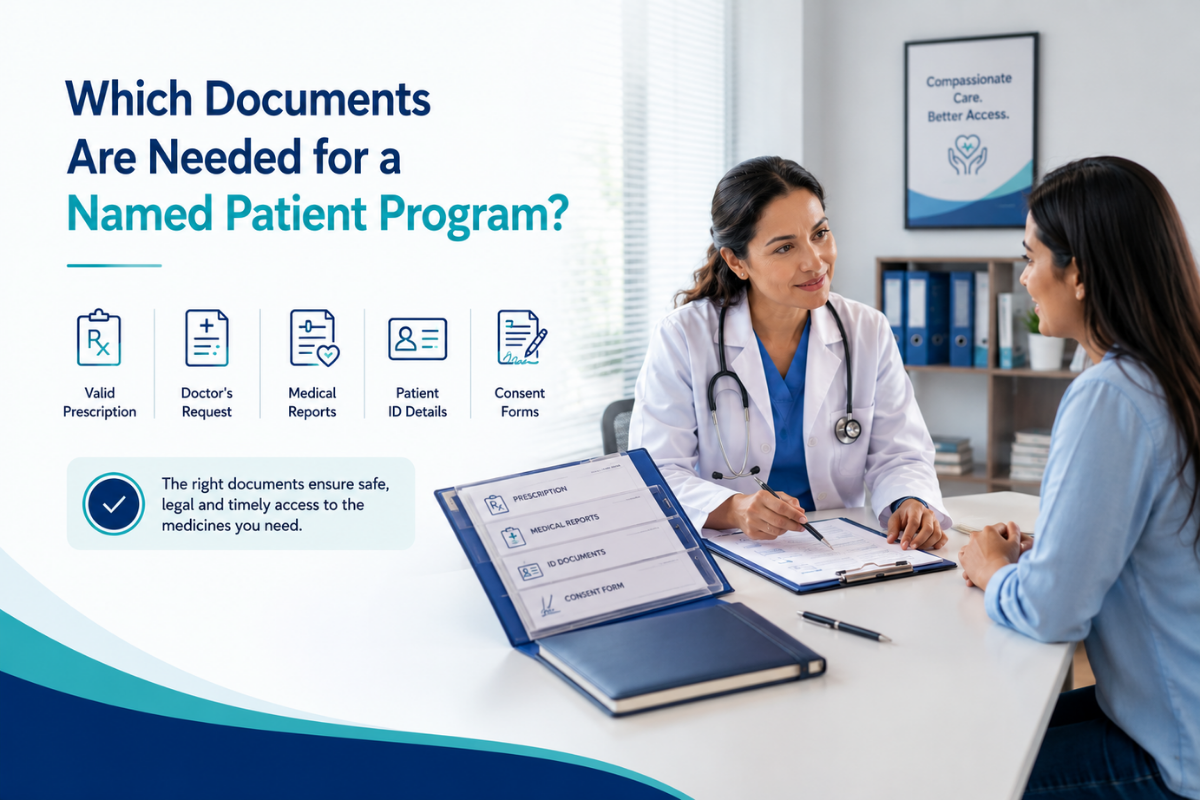
Imagine you are finally hearing about a medicine that actually fits into your disease condition. You said yes for the Named Patient Program (NPP) despite you being newly introduced but there’s the actual question. What are the documents I need? Here’s the good news. This article covers the documents you need to know.
The Named Patient Program (NPP) is not made burdensome for patients. In fact, it is the legal system that abides by the local regulation depending on the country, which ensures safety importation of specialty medicines.
Document 1: A Valid prescription from your doctor
A correct and valid prescription may contain the following:
- Patient’s name
- Quantity of the drug
- Dosage of the drug
- Strength of the drug
- Directions for use
- Doctor’s signature
- Date of issue
Document 2: Doctor’s medical request
The doctor plays an important role in justifying why the medicine is prescribed for your case. The document may also contain the following information:
- Patient’s diagnosis
- History of previous treatments (if any)
- Response to previous treatment (if any)
- Why the specialty drug is chosen for you
- Reason for not opting other treatment options
Document 3: Medical reports
Medical reports supporting your health condition are also required. Medical reports include:
- Imaging (X-rays, MRI, CT scans)
- Pathology reports
- Laboratory test reports
- Genetic or biomarker testing reports
- Previous treatment records
- Hospital discharge summaries
- Clinic consultation notes
This is a general list of medical reports but all the records are not required to submit. It depends on the disease type and severity.
Document 4: Patient identification details
The identification details based on the local regulations include:
- Passport
- National identity card
- Government-issued identification
- Other identity documents (country-specific regulations)
Document 5: Patient consent forms
Signature in the patient consent forms confirms the acceptance of the patient participating in the access program after understanding about the medicine and treatment plan. It also confirms that it is not commercially available in their country.
Document 6: Import documents
Patients often miss this part as they are not responsible for filling these documents. These are often completed by the physician, importing organisation, pharmaceutical company and an authorized representative.
Document 7: Location details of healthcare space
Sometimes, healthcare or hospital details along with doctor’s details may also be needed as additional information.
You must be wondering that it could be too many documents but it gives a better understanding about the patient, disease condition and his treatment details explicitly to the authorities involved in this process. You can contact us at Arkon Solutions for any queries, we will be happy to assist you.