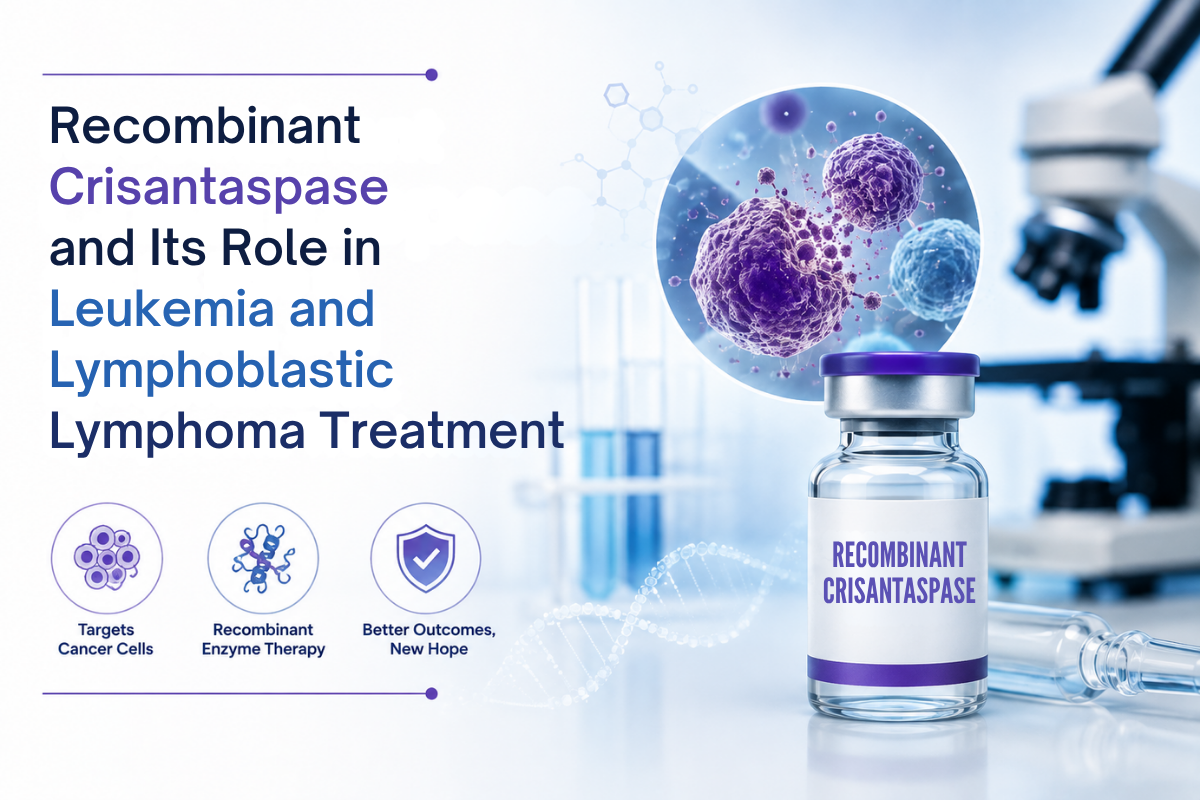
Chemotherapy frequently uses a number of medications that interact in various ways to treat some blood cancers. Enrylaze (Recombinant Crisantaspase), an enzyme-based drug used in combination chemotherapy for some patients with acute lymphoblastic leukemia (ALL) and lymphoblastic lymphoma (LBL), is one of these medications.
Enrylaze has an important role for patients who develop an allergic reaction or “silent inactivation” to asparaginase medicines derived from E. coli. Understanding what Enrylaze is, how it works, and why it may be used can help patients and families better understand its place in cancer treatment.
Understanding Acute lymphoblastic leukemia (ALL) and Lymphoblastic lymphoma (LBL)
Acute lymphoblastic leukemia (ALL) is a fast-growing cancer of the bone marrow and blood that causes the body to produce too many immature white blood cells called lymphoblasts. Healthy blood cells are crowded out by these aberrant cells, which makes it difficult to fight infections, carry oxygen, and stop bleeding.
Lymphoblastic lymphoma (LBL) is a closely related cancer that also involves abnormal lymphoblasts, but it primarily affects tissues such as the lymph nodes or other parts of the lymphatic system.
Both conditions primarily affect children, although adults are also susceptible and are generally treated using combinations of anticancer medicines.
Why is Asparginase important in the treatment?
Asparagine is an amino acid that cancer cells involved in ALL and LBL may rely significantly on. Asparaginase aids in the blood’s breakdown of asparagine. Cancer cells may not have enough asparagine to sustain their growth and survival if the amount of this amino acid is diminished.
Asparaginase can selectively attack sensitive cancer cells because normal cells are typically better equipped to manufacture their own asparagine.
Because of this mechanism, asparaginase is an essential component of many ALL and LBL treatment regimens.
When may Enrylaze be used?
Enrylaze is not a stand-alone treatment for leukemia. It is used as part of a multi-agent chemotherapy regimen.
Its U.S. FDA-approved use includes patients with ALL or LBL who have developed hypersensitivity to asparaginase derived from E. coli. In other words, it can provide an alternative source of asparaginase activity when a patient cannot continue treatment with an E. coli-derived product because of hypersensitivity or due to silent inactivation.
What makes Enrylaze different from traditional E. coli-derived asparaginase?
One important feature of Enrylaze is its Erwinia-derived recombinant asparaginase.
Its active ingredient is asparaginase erwinia chrysanthemi (recombinant)-rywn. According to the FDA prescribing information, the product is produced using a genetically engineered Pseudomonas fluorescens production system containing DNA encoding Erwinia chrysanthemi asparaginase.
This makes Enrylaze different from asparaginase products derived from E. coli.
For patients who develop hypersensitivity to E. coli-derived asparaginase, having another asparaginase option can be particularly important because maintaining asparaginase activity may be an important part of their chemotherapy regimen.
What are the important safety considerations?
Like other medicines used in cancer treatment, Enrylaze can cause side effects and requires appropriate medical monitoring.
The prescribing information includes important warnings concerning:
- Hypersensitivity reactions, including serious allergic reactions
- Pancreatitis
- Blood clots, or thrombosis
- Bleeding or hemorrhage
- Liver toxicity, including hepatic veno-occlusive disease
The prescribing information also lists several commonly reported adverse reactions, including abnormal liver tests, nausea, fatigue, headache, infection, abdominal pain, decreased appetite, hyperglycemia, diarrhea, pancreatitis, and others.
Because every patient is different, the healthcare team determines what monitoring is appropriate during treatment.
The Bigger Picture
Many medications, each with a distinct function, are used in the treatment of cancer. For some patients with ALL or LBL, Enrylaze is one element that can support a more comprehensive chemotherapeutic approach.
Enrylaze targets a metabolic vulnerability that may be significant for certain leukemia cells by assisting in the reduction of circulating asparagine. Its function is especially important for patients who have become hypersensitive to asparaginase produced from E. coli.